Showing posts with label Nature. Show all posts

Tuesday, July 16, 2013

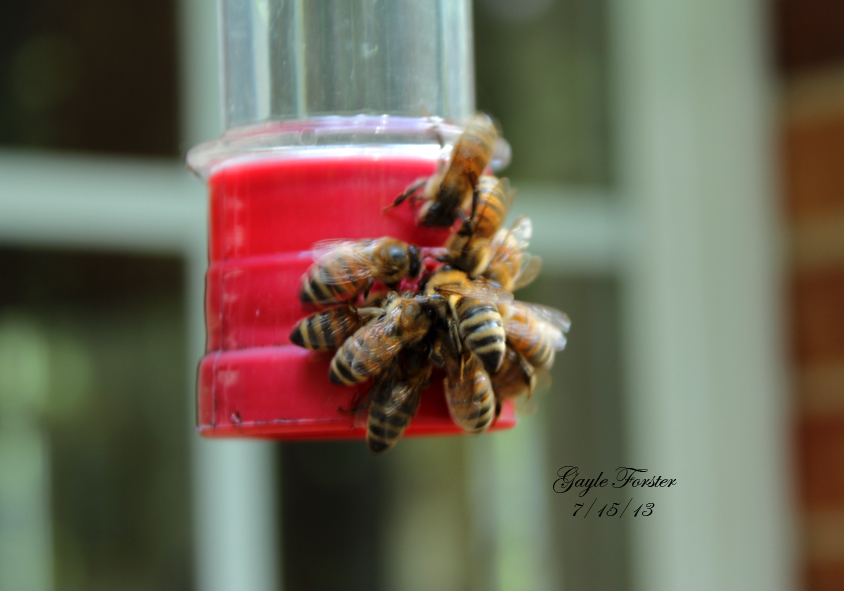
Battling The Bees For Sugar Water

https://www.youtube.com/watch?v=E9e46_9NGOY   <~~~~~~VIDEOS OF A HUMMINGBIRD ~~~~~~~~~~> BEES   https://www.youtube.com/watch?v=9AEtYhmCSfk
The hummingbirds have been feeding like crazy since I had to buy new little hummingbird feeders.  The squirrels had chewed the little nipples off almost all of my feeders.  Now after nearly two weeks the bees and yellow jackets have found the feeders too.  I went out to see what I could do to help ward off these greedy little buggers.  I am happy to report that I did NOT get stung.  They all seemed happy to see me coming!  They were feverishly crowding to each one of the feeders as though they had discovered the best thing ever..... SUGAR!  I think that after watching a CNN segment last year on the effects of sugar and the human brain I have to ask...."I wonder what this is doing to the brains of hummingbirds, bees and yellow jackets???"  They seem ADDICTED!  The segment talked about how in some people's brains sugar can elicit cravings and trigger responses that are very similar to those caused by cocaine and other addictive drugs.  I wonder if by offering sugar water, I am causing an epidemic of dependent creatures of nature looking to me for a FIX!?! 

Saturday, April 6, 2013

Mourning Cloak

This was the actual butterfly that landed in front of me.

This butterfly experience kept popping back into my thoughts after a week of intense prayer, time alone with the Holy Spirit, reading the Bible, several other books including, Rick Warren’s book, ”The Purpose Driven Life” (for the second time), and another nearly 3:00 AM awakening with a single vision of a solar eclipse that had happen a few times.  And I don’t have trouble sleeping or rarely ever recall having dreams.  I simply thought, hum…that is weird and then went right back to sleep.  I’ll get back to this striking detail in another post.
I waited nearly a week and it dawned on me that I should look up the name of this butterfly.  It gave me the weirdest feeling when I identified it.  The name of the butterfly is “Mourning Cloak”.   Some websites claim to not have any idea about where the name originated but several claim that it derives its name from the traditional Victorian mourning cloak (worn when someone was in mourning and sometimes draped over the casket of the deceased) due to its dark coloration with light trimmed edges on their wings.  That got my brain going since this butterfly caught my eye as a shadow on the ground and I looked up immediately in shock and astonishment.   First because I had just thought at that very moment about my brother-in-law who had passed away a few years ago in the spring and then shocked because it was early for butterflies! 
As I researched this butterfly more it was simply an amazing butterfly to learn about.  Remember, I mentioned how worn and tattered that it looked in my previous blog post? (With Easter fast approaching it reminded me of Jesus before his crucifixion)  It must have looked tattered because these butterflies are one of the rare butterflies that weather harsh winter cold.  In their adult form, they have a unique way of survival called, “cryo-preservation”.  They find safe places to hide, like cracks in bark of trees, leaf litter and etc.  According to one source of information they have chosen their sheltering place months before (not sure how they know this) and once in their shelter they literally become gradually frozen in their hideout.  They have to find a good shelter to be hidden from birds and squirrels that might find them a tasty winter snack.    
The Mourning Cloak is one of the longest living butterflies.  It is estimated that they live nearly 10-months with 4 or so in this hibernating stage.  It seems sad that they endure the cold winter then die shortly after mating and start the life cycle again.   Some individuals that have studies the Mourning Cloak butterflies indicate that they sometime migrate and that there is a possibility that there could be two generations of Mourning Cloaks during a year with winter hibernation for one group and possible Aestivation which is the summer equivalency to hibernation to avoid the heat and lack of adequate moisture during summer. 
An interesting behavior that was mentioned when I was researching these butterflies is that they will usually seek high objects to perch on and it can make a loud clicking noise when it takes off in flight.  This one stopped me in my tracks by landing on the ground in front of me as if to say look at me.  I suppose that he was simply looking for a sunny spot!
But I cannot help but think that it was a message or way of getting my attention.  Romans 12:2 And be not conformed to this world: but be ye "transformed" (the Greek word for transformed, metamorphosis) by the renewing of our minds.
Romans1:20 “For since the creation of the world His invisible attributes, His eternal power and divine nature, have been clearly seen, been understood through what has been made, so that they are without excuse.”


                       I found this poem that was written by:


                        Unconscious                               U
                  came a beauty to my                         n
               wrist                                                    c
              and stopped my pencil,                         o
         merged its shadow profile with                   n
      my hand's ghost                                            s
   on the page:                                                     c
   Red Spotted Purple or else Mourning               i
Cloak,                                                                o
paired thin-as-paper wings, near black,               u
were edged on the seam side poppy orange,        s
  as were its spots.                                                         C a m e  a  B e a u t y

                                                                        I sat arrested, for its soot-haired
                                                                           body's worm
                                                                           shone in the sun.
                                                                           It bent its tongue long as
                                                                             a leg
                                                                             black on my skin
                                                                               and clung without my
                                                                               feeling,
                                                                                 while its tomb-stained
                                                                                    duplicate parts of
                                                                                      a window opened.
                                                                                        And then I
                                                                                           moved.


Wednesday, March 13, 2013

Snow Feathers


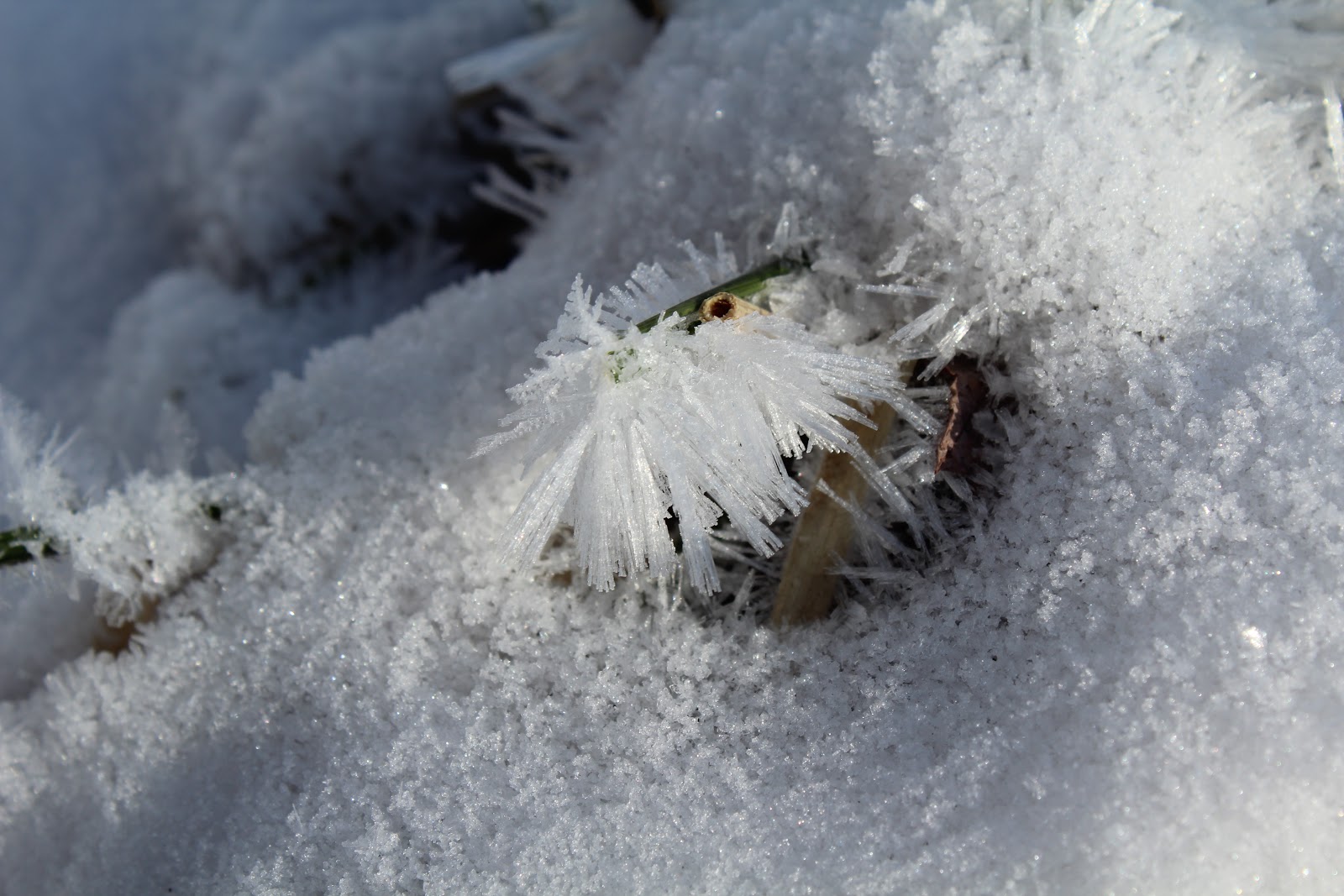
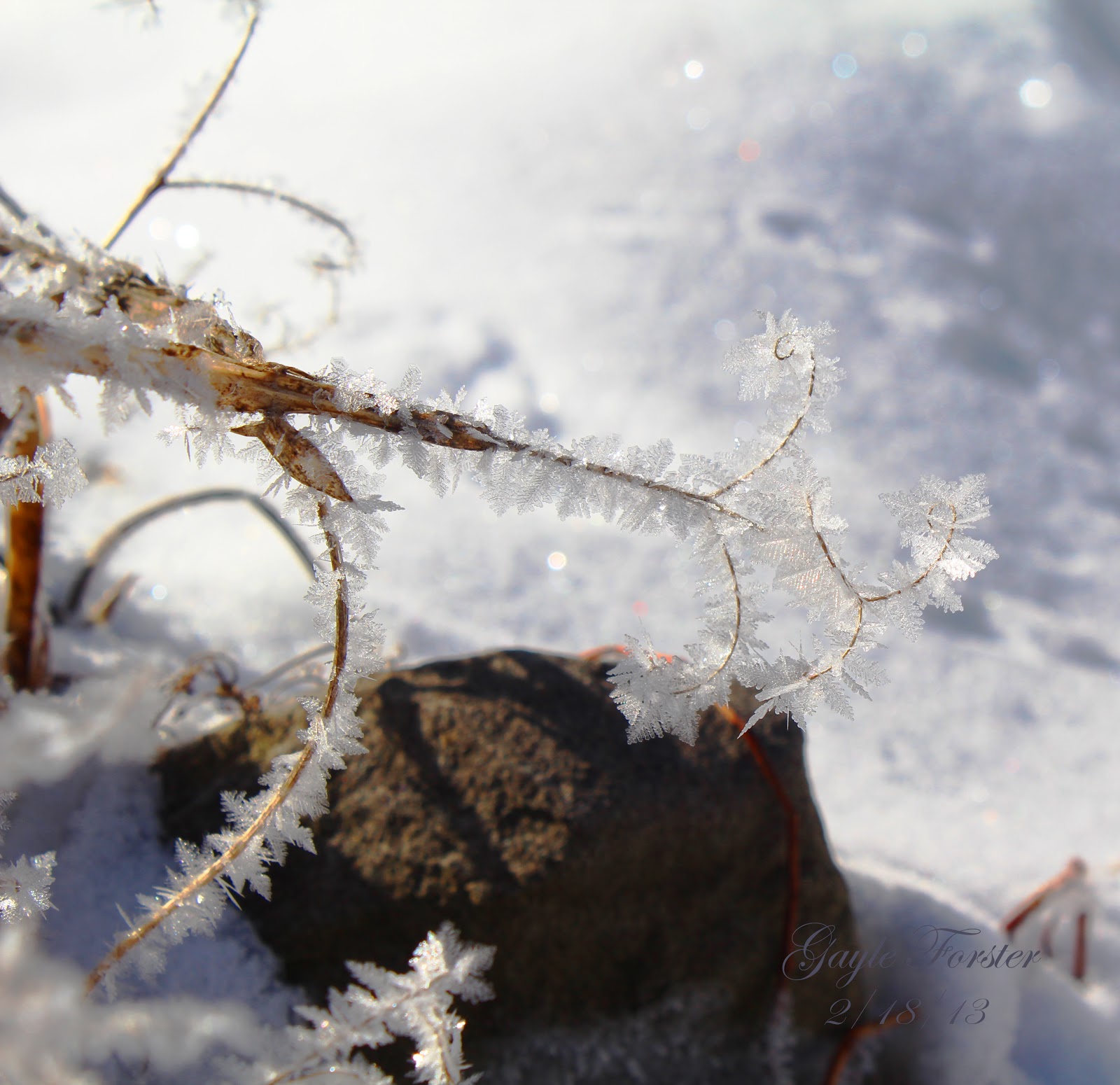
For several mornings as I began my days in this new place of winter’s bitter cold, some admitted frustration and agitation built up inside of me.  I am not a big fan of cold weather, I like nature, beauty and I like being outdoors.  Anyone that knows me knows this to be true.   I was and still am having a very hard time finding beauty and my happy place in this new town but I keep thinking about how I have written and spoken that beauty can be found anywhere if you just look hard enough.  Did I really say that and mean it?  Did I mean that hypothetically?  I had thought about that comment many times as I questioned my ability to see beauty and be internally happy despite my external conditions.  So, I thought some more…I don’t think that beauty has to be seen in order to feel happy; however, I believe that there has to be an ability to find it through your senses.  It is a sort of essence in our being, the ability to see, touch, feel and experience beauty, resulting in happiness.  I feel that it comes from within us and what we are capable of recognizing and able to enjoy given our surroundings too.  It is both seen and unseen like, the sweet expression on someone’s face, a little child’s hand or an elderly person, any person reaching out for your touch, the wind brushing your face or the visual of a sunrise, flower or snow covered earth, the sound of laughter or scent of something that carries you away and the knowledge that God loves you!   Whether you are with someone or not, in a place filled with people or all alone, I believe that we have to see beauty with our senses to be happy so then I ask myself; could I be happy if I could not see, touch, hear or smell?  If I could only feel with my heart so to speak, would that be enough?   I’m still a work in progress on that thought even though I do believe that is what I should be able to do.  I have been so spoiled to live in such an amazingly beautiful place, Sewanee, Tennessee with all of my senses intact.  Beauty abounds here.  And I feel that I have been blessed all of my life to be surrounded by beauty (beautiful places, beautiful people a sort of sensory overload) resulting in a happy feeling.  And in my moment of supposed “anguish” (not really),  call me crazy but in an instant God revealed these amazing “snow feathers” as I call them and like a child that had just discovered something new I was all excited, intrigued and in awe of these wonderfully complex formations.  I said, thank you God, for such a discovery in this moment of “I hate this place, there is nowhere to walk and nothing to see” feeling that was permeating my every thought.   Beauty enters your heart and mind through your senses and as I see God’s marvelous workmanship I am reminded that, “For since the creation of the world God’s INVISIBLE qualities-his eternal power and divine nature-have been clearly seen, being understood from what has been made” Romans 1:20  I cannot explain a unique, amazing or beautiful event without God.  No matter where I look I see God’s hand or footprints.  Simply looking around us is not enough though.  But God sure reminded me of His beauty and instilled in me a moment of happiness as I captured a few novice photo shots that do not do justice to His fast melting creations.  And in that moment I felt that the “snow feathers” were there that morning just for me to see and appreciate and be reminded of his presence! I just wanted to share these “snow feathers” with others while God reminds me that spring is just around the corner when I can be outdoors more and get my hands in the dirt and plant some flowers!


Follow Me on Pinterest

Tuesday, May 22, 2012

Our Great Pollinators

The amount of pollen that this bee had collected was amazing!  He was sprinkled with pollen everywhere!

A honey bee in utter delight of the reb bud blossoms (like me!) and getting an early start on the season back in March.
Our Salvia seems to be a great attraction for the bumble bees because they visit it often!


This bumble bee is either chilled out or totally pooped out!  I got so tickled at the way it was resting on this leaf.


There are many different pollinators and they work differently since they are not all designed the same. Each type of pollinator feeds on different plants and therefore pollinate different plants in different ways. The most common pollinators are bees, butterflies, birds, and moths. But that's not all, there are more! Other pollinators include flies, beetles, bats, occasionally the wind and man sometimes either by accident and sometimes the deliberate processes that we use to pollinate in order to make better and stronger plants occurs.
To be pollinated, pollen has to be transfered from a stamen to the stigma. When pollen from a plant's stamen is transferred to that same plant's stigma, it is called self-pollination. When pollen from a plant's stamen is transferred to a different plant's stigma, it is called cross-pollination. When cross-pollination occurs it produces stronger plants. The plants have to be of the same species or family in order for cross-pollination to occur. For example, only pollen from a rose can pollinate another rose. Pollen from a daisy or an pear tree would not work on a rose.  It is interesting to watch bees, butterflies and etc. helping this process happen!


This bee had evidently been busy!  And he continued to collect pollen from this thistle flower.


This is an Eastern Tiger Swallowtail (Papillo glaucus) helping with the pollination process of the wild azalea. Native azaleas are deciduous shrubs that are in the rhododendron family. They are fairly common where I live as well as an abundance of the mountain Laurel however; I have not noticed the common rhododendron growning abundantly and wild in our forest.